
Rebound


Rebound, to me, is the ability to come back from difficulty. Not by returning to who I was, but by moving forward with a different way of thinking. In simple terms: to keep going.
Easier said than done, I know. Because I’m still there.
Every day can still feel like a challenge, how my body responds, how it feels, how it moves. Over the years, I realised it wasn’t just about pushing through. It was about changing how I approached it.

Life with a chronic illness is unpredictable. Most of the time, it’s layered with pain. Learning to live and cope with it means being ready to change plans, sometimes at the last minute, because the body simply won’t cooperate that day. On better days, more gets done.
The question becomes: how do you find the middle ground?
For me, it always comes back to acceptance. Not as resignation, but as awareness. Accepting where I am in that moment, before trying to change anything. I learned this the hard way.
I used to try to run when I wasn’t even ready to walk. Literally. It’s no surprise that I eventually became unmotivated and spiralled downwards.
Accepting where we are in the present moment is simple in theory, but difficult in practice. If I’m tired, it means recognising that my body is asking me to slow down. It took me a long time to understand this.
Over the years, I stopped seeing tiredness as something to push through, and started seeing it as something to work with. A chance to explore softer, more gentle movement. Not less movement, just a different kind.
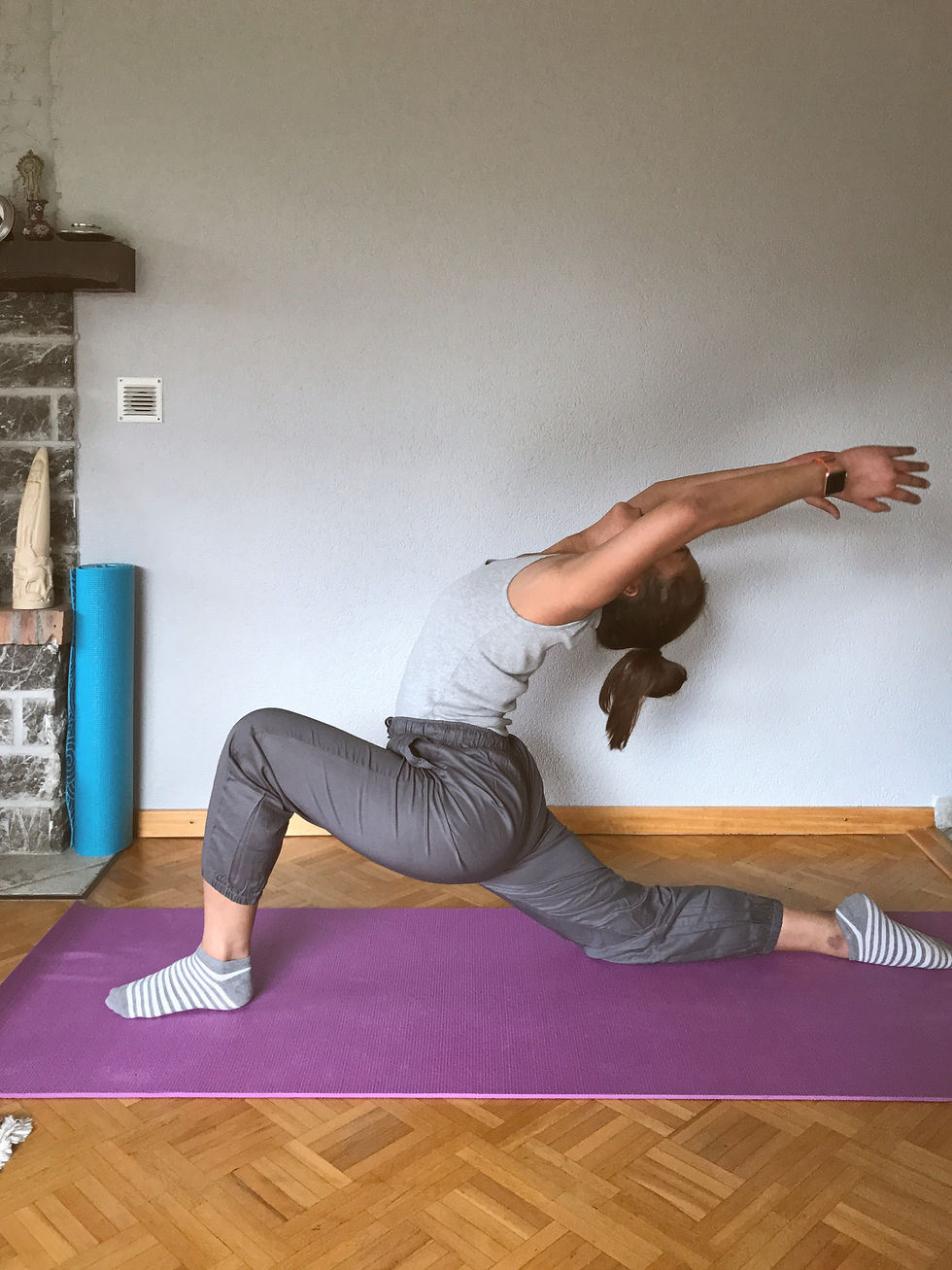
Sometimes that meant stretching. Sometimes mobility work. Sometimes yoga.
A way to bring movement back into my body, without forcing it. Because even when the body feels heavy, it’s still made to move. Not at high intensity, but in a way that keeps it moving gently.
When we feel tired, unwell, or low, the natural response is often to withdraw, step back, and do less. And that’s not necessarily a bad thing. But I noticed that the longer I stayed there, the harder it became to come back to movement. Not because I had lost the ability, but because I had lost the connection to it.
So instead of asking my body to do more, I started asking it to do something… Something small. Something simple. Something that kept the door open.
The shift happened when I decided to begin again, every single day.
Some days I moved my hands and wrists. Other days, my shoulders and neck. There were
moments when I could do more, and many where I did less. But I kept moving, bit by bit. And slowly, something started to change. Not all at once, but enough for me to feel it, more mobility, more ease, and more movement in my body.
It gave me hope. Because even the smallest changes felt real.
That’s what I learned about movement. It’s not just something you do. It’s something that responds. The more I gave to it, the more it gave back. And with that, my confidence grew.
I started adding simple things. Walking, for example.
I will never forget the time when 600 metres felt hard. I used to be so hard on myself for it, thinking it wasn’t normal for my body in my early thirties to struggle like that. The tougher I was on myself, the harsher my body felt, almost as if it revolted against me.
Over the years, I learned to soften. To forgive. To accept the days when my body needed more care.
So I started where I was.
Since 600 metres felt too much, I began with 300. I walked every day. Then it became 400, 500, and eventually I passed the 600 metre mark without pain. I was untrained, but I learned to breathe through my steps. Walking became consistent. I could go on longer, flatter hikes. I grew stronger.

When I had flare-ups, I rested. Sometimes that meant a short nap, fifteen to thirty minutes. Sometimes longer, an hour, or even half a day. It wasn’t giving up. It was giving my body what it needed to recover.
I had to remind myself that with a diagnosis comes responsibility. Not to do more and more and more, but to take better care. To listen more closely.
Accepting that my body no longer functioned the same way was difficult, but not impossible. Because if I had made it this far, then there was still something to build on.
Every setback, muscle cramps, joint pain, moments of demotivation, self-doubt... they chipped away at my confidence. But I refused to let it define me. I am not my pathology.
Every day is a rebound. Not back to who I was, but forward from who I was the day before.


Comments