
What Makes Training Functional?

Updated: May 17
I didn’t choose functional training because it was trendy. I chose it because I needed a body I could live in again, not just train in. At some point I realised there is a difference between gym strength and life strength. One looks impressive under a barbell. The other lets you walk uphill, carry groceries, get off the floor, breathe without bracing, or move without fear. Functional training is built for the second kind.
So what does “functional” actually mean?
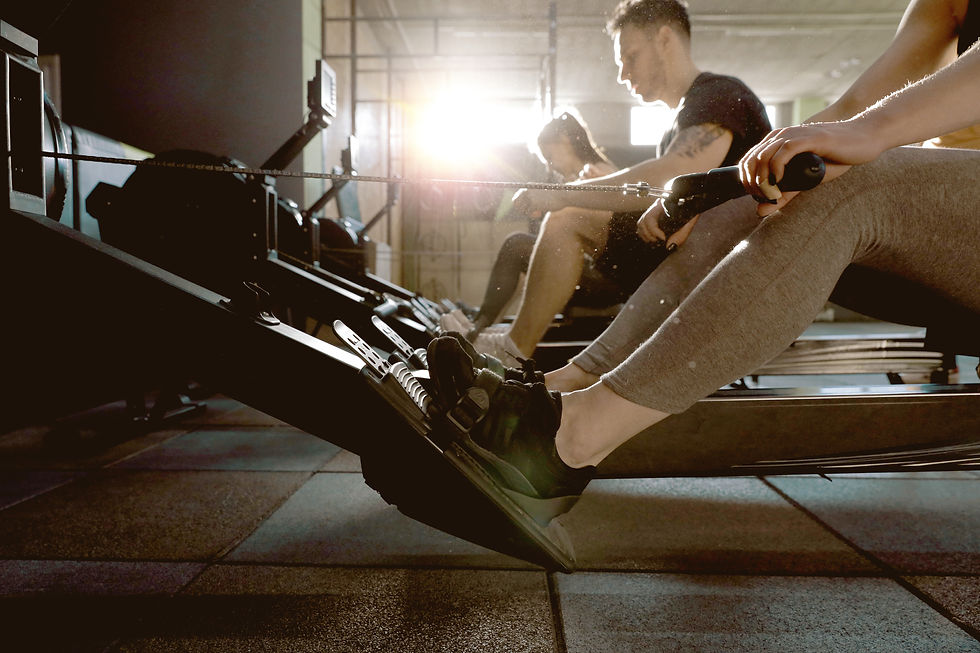
The word “functional” has been used so much it almost lost meaning. It has been treated as a trend, a label, or a style of exercise that looks unconventional. But functional training is neither a fad nor a category. It simply means training your body in a way that supports the way you live, not just the way you lift.
It is not about isolating a single muscle. It is about improving the relationship between muscles, joints, breath, balance, coordination and the nervous system. It teaches the body to hinge, rotate, lift, push, pull, carry, stabilise and adapt with confidence. It improves how the body absorbs, transfers, resists and recovers from force. In other words, it trains you for gravity, not for machines.
And yes, bodybuilding, powerlifting and Olympic weightlifting can be functional, but only as a side effect. Their primary goals; aesthetic, maximal load, competitive performance, are different. Functional training reverses the priority: its purpose is life, not the mirror, not a podium, not a personal record.
The by-product? You still get stronger, build muscle, improve posture and confidence, only you gain those through ability, not appearance. You don't train to look capable. You train until you are. And through that, you end up looking good too.

Why muscle training alone isn’t enough
You can have strong legs and still feel unstable going downstairs.
You can have a big deadlift and still struggle to get off the floor without using your hands.
You can build visible muscle and still feel pain, stiffness, or hesitation moving through space.
Strength without function is decoration. Function without strength is fragility. Real resilience is the meeting point between the two.
Human movement is organised around patterns, not muscles. The nervous system does not think “activate the biceps.” It thinks “reach,” “lift,” “rotate,” “stabilise,” “step,” “halt,” “breathe.” That is why functional training uses compound movements, multiple planes of direction, and demands that stability, mobility, and strength coexist rather than compete.
The more your training rehearses what the body is built for, the more it adapts to a life rather than to machines. Science backs this:
Who is it for?

Functional training is not reserved for a type of person. It is for anyone who wants a body that supports their life instead of limiting it, whether that means:
training for a race
recovering from injury or surgery
navigating menopause or chronic fatigue
lifting a child, a suitcase, or a bag of soil
building bone density
simply feeling safe in movement again.
Different needs same training system.
What functional training is not
It is not balancing on unstable objects for the sake of novelty.
It is not replacing strength with light “toning” circuits.
It is not making exercises complicated so they appear advanced.
It is not an aesthetic method disguised as a “functional” one.
True functional training has intention, progression, transfer, and purpose. If it doesn’t make you more capable in the real world, it’s not functional, it’s just exercise.
So how and where do we start?
We start by meeting the body exactly where it is, not where it used to be, not where we wish it were, and not where someone else thinks it should be. Progress doesn’t begin with intensity. It begins with honesty and awareness.
Restore the basics: breath, joint control, the ability to move without bracing or fear.
Layer load, challenge stability, and build strength that can rotate, carry, climb, resist, and endure.
Not for aesthetics.
Not for performance metrics.
For autonomy, the ability to trust your body again.

The strongest body is not the one with the most visible muscle.
It's the one you trust. Functional training isn't a trend or a fitness category. It's the most human way to train a body: for movement, for capacity, for life. And that's why it lives at the core of Rebound, where movement meets medicine and strength becomes freedom.
Want to go deeper? Follow the next article in the 7-patten series and download the free 7 Core Patterns Starter Kit.


Comments