
Strength Training in Midlife: Why It Matters More Than Ever

Updated: Sep 27, 2025
Hormonal shifts in midlife are inevitable, but the decline doesn’t have to be. As estrogen and progesterone begin to fluctuate and drop, we start to feel the ripple effects across the body: muscle loss, slower recovery, changes in metabolism, joint pain, disrupted sleep, mood swings, and fat redistribution. These are more than surface-level complaints, they reflect how deeply hormones shape our physiology.
The good news? Strength training is one of the most powerful tools we have to push back. It helps us feel grounded when our bodies feel unpredictable. While we can't control our hormones, we can build strength, and with it, a greater sense of control, stability, and resilience, through change.
Why Strength Matters More Than Ever

Estrogen plays a key role in muscle protein synthesis, bone density, insulin sensitivity, and mitochondrial function (our cells' energy factories). As it declines, our bodies naturally become more prone to fat gain and muscle loss (a process called sarcopenia). Without intervention, we lose about 3-8% of muscle mass per decade after 30, and the rate accelerates post-menopause.
But we can change that.
Heavy, progressive strength training signals your body to preserve muscle and build bone. When you lift heavy, your muscles are challenged in a way that triggers them to rebuild stronger, which is key for maintaining muscle and bone mass. In contrast, lifting lighter weights for many reps builds muscular endurance, not the deep strength or bone density we need more of in midlife. While muscular endurance has its place, it's strength training—with heavier loads and full-body effort—that creates the deeper changes in bone, muscle, and metabolism we need to stay physically capable as we age.
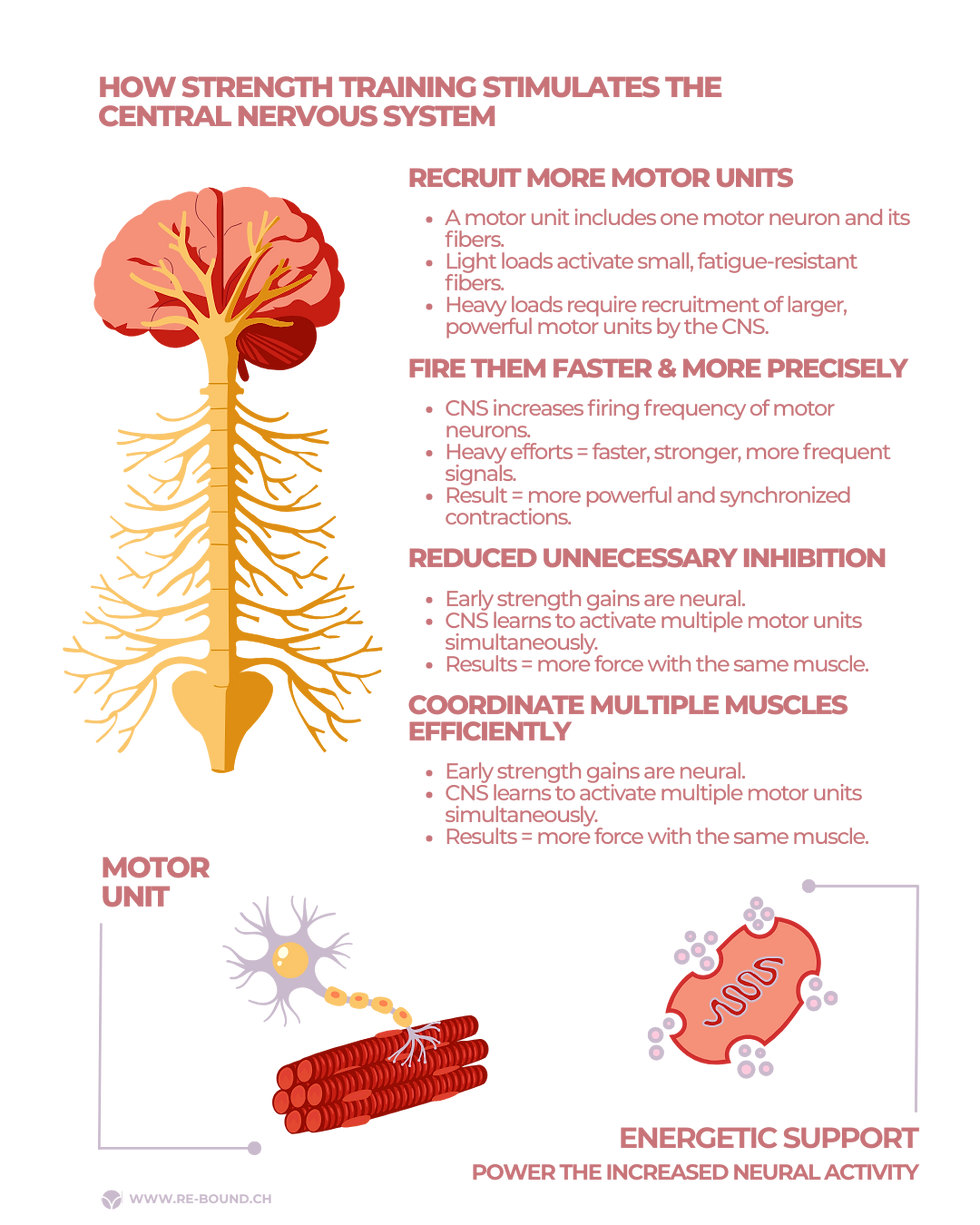
The goal is to stimulate the central nervous system to recruit and coordinate more muscle fibres, and that's what strength training does.
It also improves posture, balance, cardiovascular health, and even mental well-being. Unlike other types of exercise, it creates the kind of stress that stimulates deep adaptation, making us more resilient, metabolically active, and physically capable.

“But I Don’t Want to Get Bulky or Injured”

Let’s clear that up. Achieving a bodybuilder-like physique as a woman requires a very specific protocol: high training volume, targeted hypertrophy work, and eating in a consistent caloric surplus over time. This is very different from strength training, which focuses on lifting heavier loads for fewer reps to build power, not size.
In short, strength training is what it is: training for strength. And bodybuilding is what trains for size.
Unless that's what you're looking for of course ;) I'll still be very happy to help.
Strength-focused programs like Rebound M use low to moderate reps with heavy weight: the main goal is function, not physique. You’ll get stronger, feel more solid and capable, but not bulky. Over time, you will notice a leaner, more defined shape—because building muscle increases your metabolism and supports healthy fat loss in a sustainable way.
With proper coaching and progression, resistance training has lower injury rates per training hour than many high-impact activities. And the benefits outweigh the risks.
Your Strength Prescription
Train 2-3x/week with a structured plan
Focus on foundational movement patterns: squat, hinge, push, pull, carry...
Use heavier loads and rest enough between sets (1-3 minutes)
Combine with cardio and proper nutrition (especially protein!)
Respect your symptoms: align training with your cycle and energy
Rebound M: A Strength Path Made for You
For the woman who wants to feel capable in her body again, with clarity and confidence.
In each session, we:
Train for strength, balance, and recovery
Adapt to your energy levels and recovery capacity
Offer tools that you can use outside the studio too
Rebound M was designed with midlife physiology in mind. We focus on strength, balance, and recovery while respecting where you are in your hormonal journey.
Because menopause isn't a weakness, it's a transition. And strength is how we move through it with confidence.
[Link]
Educational content only. Always consult your clinician before starting any new training protocol.

Comments