
Movement Pattern: Rotation - How We Move Through Complexity

Updated: May 19

Rotation took me longer to notice.
Not because it was difficult to do, but because it was easy to ignore.
For a long time, I focused on moving forward. Squat, hinge, push, pull, everything felt structured, linear, predictable. Rotation was there, but it felt secondary. Something that happened in the background, not something I needed to understand.
Until I realised that when something felt off, it was rarely because I lacked strength.
It was because that strength had nowhere to go.
If the squat teaches you how to rise, the hinge how to lift, the push how to meet resistance, the pull how to gather strength, and the lunge how to move through space...
Rotation teaches you how to connect it all.
Not by adding more strength. But by allowing that strength to travel. Because life rarely asks you to move in straight lines.
You turn.
You reach across your body.
You look behind you.
You twist to grab something.
You change direction mid-step.
That's rotation.

The Movement We Lost Without Noticing
Most of us didn’t lose rotation through injury.
We lost it through repetition.
Same desk.
Same direction.
Same patterns.
We spend hours facing forward, moving forward, training forward. The body adapts quickly to what it does often. So it simplifies. It reduces rotation because it’s no longer needed.
Until suddenly it is.
And when we ask for it again, it feels stiff, unfamiliar, sometimes even uncomfortable. Not because it’s gone. But because it hasn’t been used.
What Rotation Actually Is
Rotation isn’t a twist. It’s a distribution problem.
Where does the movement go?
Ideally, it’s shared:
a little from the hips
a little from the thoracic spine
a little from the shoulders
guided by breath
When that distribution is lost, the body looks for the easiest option. Usually, that’s the lower back. Not because it’s designed for it, but because it’s available.
That’s where rotation stops being efficient and starts becoming compensatory.
Before we load rotation, we need to be able to control it. This is where most people realise how little of it they actually own.
Rotation in Everyday Life
Rotation doesn’t show up as an “exercise” in daily life. It shows up as adjustment.
You don’t think about rotating, you just:
turn to respond to someone
reach across to grab something
shift your body to change direction
carry something on one side
walk without thinking about how your arms and torso counterbalance each step
Even gait is rotational. Each step is a quiet exchange of force across your body. Remove rotation, and movement becomes segmented. Reintroduce it, and everything starts to feel more continuous.
What Rotation Really Works
Rotation is not one muscle. It’s an integration. When you rotate well, these systems work together:
Obliques (internal & external)
Control and generate rotation.
Transverse abdominis
Stabilises pressure and support.
Thoracic spine
Provides the majority of rotational range.
Hips
Initiate and absorb movement.
Shoulders
Transfer rotation into the upper body.
Nervous system
Coordinates timing, rhythm, and control.
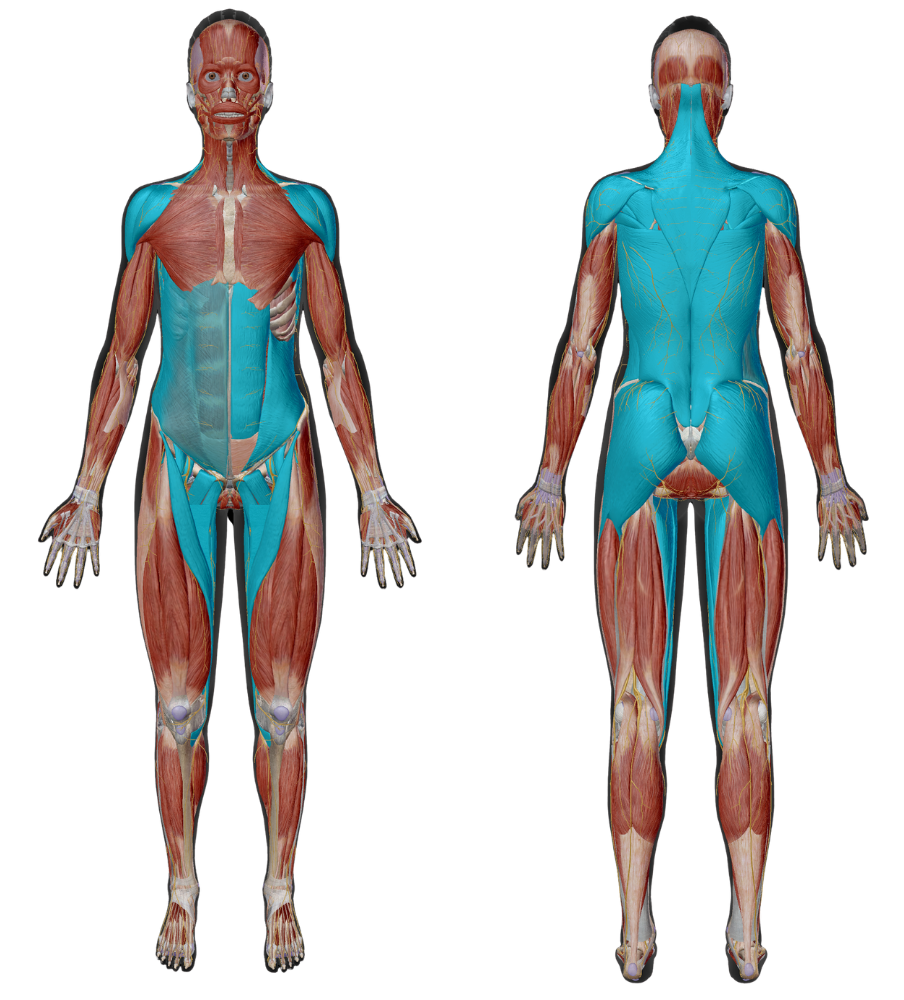
A good rotation feels smooth. A forced rotation feels like something is compensating.
Once rotation is controlled, it can be integrated into strength.
This is where it becomes functional.
Form Follows Function
Rotation is not about how far you can twist. It’s about how well you control the twist.
What matters:
movement distributed across the body
no collapsing into the lower back
breath guiding the motion
control in both directions
no forcing range
In many cases, restriction isn’t a lack of mobility. It’s a lack of control. The body limits what it doesn’t trust.
The Emotional Side of Rotation
Rotation requires letting go of rigidity. It asks the body to:
move out of centre
shift direction
adapt in real time
For many people, especially after injury or chronic tension, that feels unsafe. So the body stiffens. It avoids twisting. It prefers straight lines.
But life doesn’t move in straight lines. The first time someone rotates freely again, without tension, without hesitation, it feels like unlocking something.
Remember that feeling while in the twisted thoracic spine stretch? It's freeing, like something finally moves where it should, and often takes pressure off the lower back.
Try This. Notice Your Rotation
No equipment needed. Just awareness.
1. The Seated Turn
Sit tall. Rotate gently to one side.
Notice:
where the movement comes from
whether it stays in your mid-back or drops into your lower back
if one side feels easier
2. The Reach Across
Stand tall. Reach across your body as if grabbing something slightly behind you.
Notice:
if the movement feels fluid or segmented
if your breath changes
whether your hips contribute or stay stuck
3. The Walking Check
Walk normally.
Notice:
if your arms swing naturally
if your torso rotates subtly
or if everything feels held in place
These are not tests.
They’re observations.
Rotation tells you how well your body handles change.
Why It Matters
Rotation is what makes movement efficient.
Without it, walking becomes stiff, lifting turns compensatory, posture grows rigid, and the body becomes more prone to overload and injury. Strength stays local, and movement starts to feel segmented rather than connected.
With it, force transfers smoothly across the body. Movement feels lighter, more coordinated, and less effortful. The body adapts more easily because it’s no longer relying on one area to do everything, it shares the work.
Rotation doesn’t add something new.
It connects what’s already there.
Where This Fits in Rebound
Rotation isn’t another pattern to train.
It’s the layer that allows the others to work together.
Without it, the squat remains vertical, the hinge stays isolated, and push and pull movements remain linear and contained. Strength exists, but it doesn’t travel.
With rotation, movement becomes three-dimensional. Strength becomes adaptable, transferable, and usable beyond the exercise itself. The body responds more efficiently because it’s no longer moving in parts, but as a system.
Your Free Rotation Progression Program

Like the other patterns, the Rotation Progression will guide you through:
Level 1: Breathing & controlled rotation
Level 2: Segmental thoracic movement
Level 3: Loaded rotation
Level 4: Rotational power & integration
Simple. Structured. Rebound-style.
Movement isn’t just about doing things well in one direction. It’s about staying organised when direction changes.
That’s what rotation teaches.


Comments